Welcome to The Inner Picture - Specialising in Equine Thermography
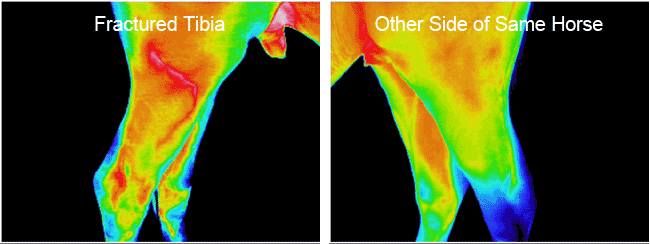
Although most experienced horse owners are able to identify heat in a leg or foot, usually indicating inflammation, a pulled tendon or an abscess, there are often symptoms of discomfort or poor performance where the horse is showing no physical signs of injury. A human touch cannot identify changes in temperature of less than 2 degrees, however, a thermal camera can “see” and detect changes of less than 0.5 degree, making it easy to identify problem areas, where heat is not obvious to the touch.
A thermal imaging inspection is a non invasive procedure, it's just like taking a video or your horse, and is carried out on your own premises. This eliminates any need for the horse to travel, they are more relaxed in their own surroundings and there is no stress involved. It doesn't take long and you can see the results displayed as an instant, clear image on an LCD screen. In addition, all images are provided to you on a CD allowing you to discuss the results with your own vet, or decide on a course of treatment.
With Level 1 Infrared Thermography Certification and experience since 2003 in Equine Thermography why else should you choose the Inner Picture?
- We use a high resolution thermal imaging camera approved for use in both medical and veterinary applications
- Trained with US Vet Donna Harper who has used thermal imaging for over 20 years.
- We come and visit your horse at home, no travelling involved.
- We will visit large yards and individual horses.
- Available 7 days a week.
- Many years experience owning horses and in different areas of equine activity.
- We also offer complementary therapies including Merishia massage and low level laser therapy.
- We are a small local business driven by a genuine love and compassion for horses.
