Lameness and Hoof Problems including monitoring of Navicular and Laminitis
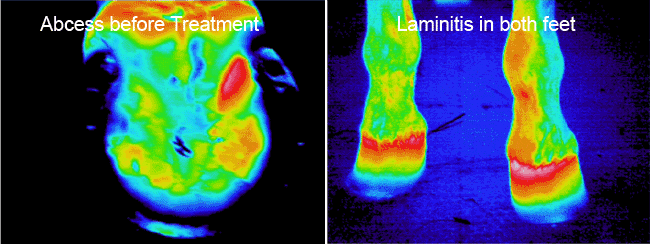
Infrared imaging is particularly helpful with difficult to detect problems such as non specific lameness. Because there are so many different diagnoses to be made, finding the source of a problem ensures that the correct treatment can take place from the start. An infrared inspection from a thermal camera can confirm whether there are heat anomalies in the leg or hoof, such as excessive heat possibly indicating an abscess, or cooler areas, often the symptoms of poor blood flow.
How Thermal Imaging can help to identify causes of lameness
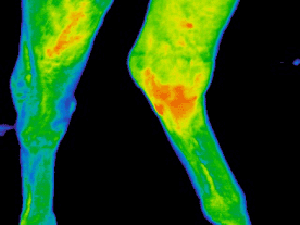 A thermal imaging scan identified an
 infection below this horse's hock joint
Some horses may appear lame through the shoulder and show an unwillingness to have a natural gait, however it can often be discomfort in the hooves that is affecting the horses natural movement. This can be caused by a variety of ailments such as Navicular, Laminitis, Side Bone, Ring Bone, degenerative disorders of the joints and ligaments or ligament and tendon strains, fractures and many more. A quick scan with an infrared imaging camera can help to identify these areas enabling any necessary treatment to commence to rectify the problem and alleviate any discomfort.
How Thermal Imaging can help to identify problems in horses hooves
The hoof wall is a solid object so it is not always easy to determine changes that are happening within the foot, and very often the first indication that there is a problem is when the horse goes lame. If the shape and angle of the hoof is not correct, this can have a detrimental effect on how a horse moves and can cause added strain to check ligaments and tendons. Very often, lameness associated with hooves may be caused by something that can be simply rectified by rebalancing or shaping the hooves correctly. In this instance, a thermal inspection can be a valuable aid to assist with shoeing and foot balancing. Farriers are starting to use thermography to look at the changes that occur in a horse’s foot, and are developing methods of balancing and shoeing based on these results. Ongoing treatment and its effects can be regularly checked providing the Farrier with a visual method of monitoring the effectiveness of treatment and allowing changes to be made as the case progresses.
An infrared inspection can quickly detect areas within the foot that are showing abnormalities in temperature. Abnormal heat in a specific area can indicate an abscess and the thermal image can easily locate its source. Abnormal heat across the whole hoof can often indicate excessive blood flow and the onset of laminitis. Research based on thermography findings is also being carried out which will enable further understanding on problems in the feet caused by laminitis which has profound effects on the blood flow to the foot.
